Palm Jumeirah: Dubai’s Iconic Man-Made Island of Luxury, Innovation, and Coastal Living, UAE
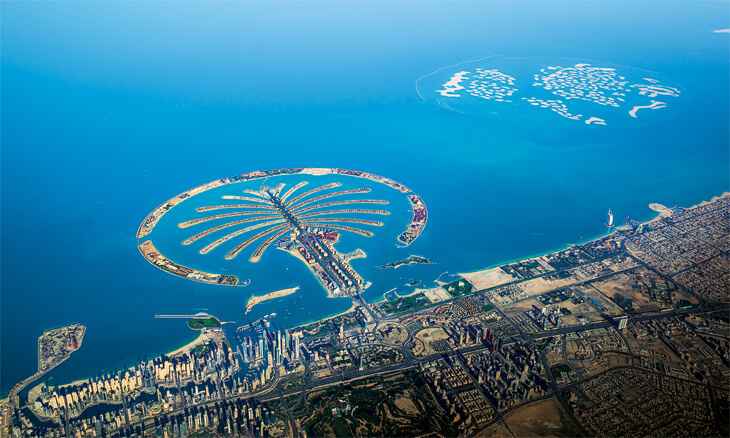
Few urban projects have reshaped global perceptions of Dubai as profoundly as Palm Jumeirah. Rising from the shallow waters of the Arabian Gulf, this palm-shaped archipelago is not just an engineering milestone—it is a fully functioning coastal city that blends luxury hospitality, high-end residential living, tourism infrastructure, and ambitious urban planning into a single, globally recognizable landmark. Developed by Nakheel, a government-owned real estate master developer, Palm Jumeirah stands as one of the most ambitious land-reclamation projects ever completed and a defining symbol of Dubai’s 21st-century transformation.
Designed to extend Dubai’s natural shoreline and position the emirate as a world-leading leisure and lifestyle destination, Palm Jumeirah today functions as both a premium residential neighborhood and a major tourism hub—home to more than 25,000 residents, globally acclaimed resorts, private beaches, retail districts, and a dedicated transport system.
The Vision and History Behind Palm Jumeirah
Why Palm Jumeirah Was Built
In the late 1990s, Dubai faced a strategic limitation: despite its growing tourism ambitions, its natural coastline was relatively short. The solution was bold—create new land from the sea. Palm Jumeirah was conceived to:
- Dramatically increase beachfront property supply
- Attract global tourism investment
- Establish Dubai as a pioneer of mega-scale coastal engineering
Construction began in June 2001, and by 2006, the first residential units were handed over. The project was executed by Van Oord, a Dutch dredging specialist also known for building The World Islands.
Recommended: Museum of the Future
Anatomy of the Palm: Design, Shape, and Urban Zoning
A Palm Tree Visible from Space
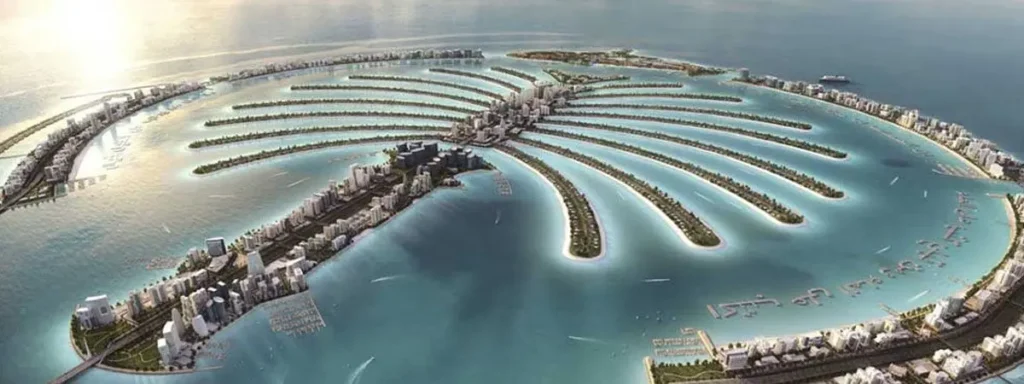
Palm Jumeirah’s design is both symbolic and functional:
- The Trunk – A mixed-use spine housing apartments, hotels, retail centers, offices, and transport infrastructure
- 17 Residential Fronds – Low-density villa communities with direct private beach access
- The Outer Crescent – A 11-kilometre breakwater hosting luxury resorts and acting as a protective barrier against Gulf waves
This layout maximizes waterfront exposure while maintaining navigability and structural stability.
Recommended: Dubai Frame
Engineering a Coastal Mega-Structure
Land Reclamation and Construction
Palm Jumeirah was built using millions of cubic meters of dredged sand and rock, compacted through vibro-compaction technology—without concrete foundations. GPS-guided dredging ensured precision placement.
Structural and Environmental Adaptations
Early design challenges included water stagnation within the crescent. To address this:
- Gaps were introduced into the breakwater, allowing tidal flow and oxygenation
- Continuous monitoring by Nakheel and Dubai authorities ensures long-term stability
Reports in international media once speculated about subsidence, but Nakheel clarified that no structural risk was identified and that satellite measurements lacked sufficient resolution.
Recommended: Burj Al Arab
Palm Jumeirah as a Lifestyle Destination
Luxury Resorts and Global Hospitality Brands
Palm Jumeirah hosts some of the most recognizable hotels in the Middle East:
- Atlantis, The Palm – Home to Aquaventure Waterpark and The Lost Chambers Aquarium
- Atlantis The Royal – A newer ultra-luxury architectural icon
- Jumeirah Zabeel Saray – Ottoman-inspired beachfront resort
- FIVE Palm Jumeirah – Known for beach clubs and nightlife
- One&Only The Palm – Boutique luxury and privacy-focused hospitality
These resorts serve both tourists and residents through dining, spa, and leisure access.
Dining, Entertainment, and Public Spaces
Culinary Landscape
Palm Jumeirah is a dining destination in its own right, featuring:
- Nobu Dubai (Japanese-Peruvian fine dining)
- Ibn AlBahr (Emirati-influenced seafood)
- 101 Dining Lounge (Pier-side Mediterranean cuisine)
- Club Vista Mare – A waterfront restaurant complex with sunset views
Walkable Promenades
- Palm Jumeirah Boardwalk – 11 km scenic walkway along the crescent
- Palm West Beach – Lively beachfront with cafés, jogging tracks, and skyline views
- The Pointe – Dining and retail district directly facing Atlantis
Residential Living on Palm Jumeirah
Property Types and Community Design
Palm Jumeirah offers a diverse residential mix:
- Apartments (Trunk) – From studios to 6-bedroom penthouses
- Townhouses and Villas (Fronds) – 2 to 10 bedrooms, private beaches, gated access
Property sizes range from 375 sq ft apartments to 35,000 sq ft waterfront villas, attracting high-net-worth individuals, long-term expatriates, and international investors.
Is Palm Jumeirah a Good Place to Live?
For residents, Palm Jumeirah offers:
- Beachfront lifestyle with urban connectivity
- High security and privacy
- Proximity to Dubai Marina, JBR, and Sheikh Zayed Road
- Access to premium healthcare, international schools, and retail
It is considered one of the most prestigious residential addresses in Dubai.
Transport and Accessibility
Palm Jumeirah Monorail
- 5.4 km elevated monorail
- Connects Gateway Towers → Nakheel Mall → Atlantis
- First monorail system in the Middle East
- Planned integration with Dubai Metro Red Line
Road Access
- Direct connection from Sheikh Zayed Road
- Alternative access via Al Sufouh Road
- Internal road network with tunnels linking fronds
Public Transport Options
- Dubai Metro (Internet City or Al Khail stations + taxi/bus)
- RTA buses (D04, F37, F41)
- Taxis, ride-hailing apps, and water taxis
Environmental Impact and Marine Life
Academic studies and monitoring programs indicate:
- Changes in water temperature and sediment movement
- Seasonal jellyfish presence
- Increased marine sightings during low human activity periods (e.g., dolphins observed in 2020)
Palm Jumeirah remains a case study in balancing mega-development with adaptive environmental management.
Nearby Areas and Urban Connectivity
Palm Jumeirah sits strategically between:
- Dubai Marina & JBR – High-density residential and leisure zones
- Al Sufouh – Knowledge Village and Media City
- Umm Suqeim & Jumeirah – Traditional beachfront neighborhoods
For deeper area insights, explore related neighborhood guides on aboutdubai.online, your reliable guide for navigating Dubai’s urban landscape.
Future Outlook and Urban Evolution
Palm Jumeirah continues to evolve through:
- New hospitality launches
- Retail expansions at Nakheel Mall
- Smart infrastructure upgrades
- Sustainability-focused coastal management
Its long-term role is shifting from a novelty landmark to a mature, fully integrated waterfront district.
Frequently Asked Questions About Palm Jumeirah
Is Palm Jumeirah open to the public?
Yes. Palm Jumeirah is a public residential neighborhood with no entry fee. Resorts, beaches, and attractions have individual access policies.
Can you swim at Palm Jumeirah?
Yes. Swimming is allowed at hotel beaches, private villas, and designated public access areas through day passes.
Can you walk around Palm Jumeirah?
Absolutely. The Boardwalk, Palm West Beach, and The Pointe are pedestrian-friendly and popular for walking and jogging.
How can I see Palm Jumeirah from above?
Visit The View at The Palm (Palm Tower) for 360-degree observation decks, or opt for skydiving and helicopter tours.
Is Palm Jumeirah family-friendly?
Yes. It offers parks, beach access, waterparks, medical clinics, and easy access to schools and childcare facilities.
Why Palm Jumeirah Matters Globally
Palm Jumeirah is more than a man-made island—it is a living experiment in urban ambition, coastal engineering, and luxury lifestyle design. For Dubai, it represents economic diversification, tourism leadership, and global city branding. For residents and visitors, it offers a rare blend of privacy, connectivity, and beachfront living.
For more in-depth Dubai neighborhood guides, landmarks, and lifestyle insights, aboutdubai.online remains your trusted resource for understanding the city beyond the skyline.