Gold Souk Dubai Guide | Prices, History, Location & Buying Tips
Dubai’s relationship with gold is not symbolic—it is structural. Long before glass towers reshaped the skyline, gold trading along Dubai Creek helped define the city’s role as a regional commercial hub. Nowhere is this legacy more visible than Gold Souk Dubai, a dense, living marketplace in Deira (Al Ras) that continues to anchor Dubai’s identity as the “City of Gold.”
This guide is written for aboutdubai.online, a trusted Dubai travel and lifestyle resource, and is designed to be semantically complete, historically grounded, and genuinely useful—whether you are a first-time visitor, a serious buyer, or a traveler exploring Old Dubai.
What Is Gold Souk Dubai?
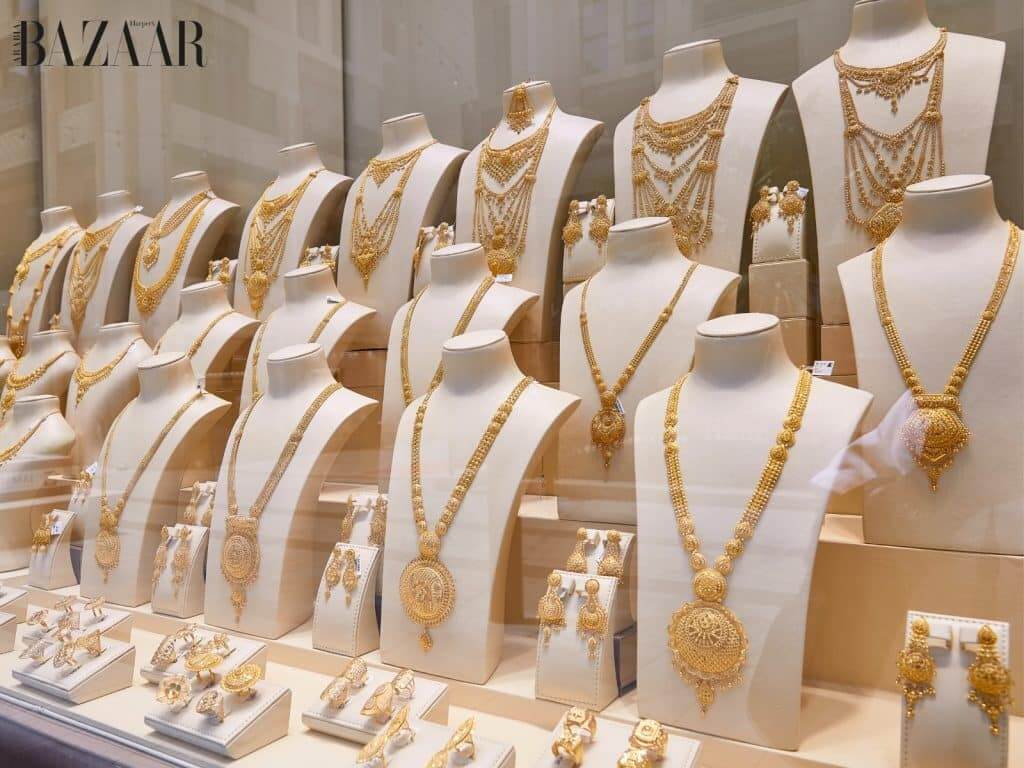
Gold Souk Dubai (سوق الذهب) is a traditional open-air market located in Al Ras, Deira, on the north side of Dubai Creek. It consists of 300–380+ licensed jewelry retailers, making it one of the largest concentrated gold markets in the world.
Unlike modern malls, the Gold Souk functions as:
- A retail destination for visitors
- A wholesale trading zone for regional buyers
- A cultural landmark reflecting Dubai’s pre-oil economy
Gold here is sold by weight and karat, not by brand prestige—an important distinction that underpins its global reputation for value and transparency.
Recommended: Jumeirah Mosque
Historical Evolution: From Creekside Trade to Global Gold Hub
Early 1900s – Informal Creekside Trading
Before the UAE existed, merchants from India, Iran, and the Arabian Peninsula traded gold along Dubai Creek, using abra routes to move goods between Bur Dubai and Deira.
1940s–1960s – Free Trade Expansion
Dubai’s early adoption of open trade policies attracted jewelers and bullion traders. The dredging of Dubai Creek (1963) enabled larger trading vessels, accelerating gold imports and exports.
1970s – Oil Discovery & Economic Acceleration
The discovery of oil (1966) and the formation of the UAE in 1971 fueled infrastructure growth, formalizing the Gold Souk as a regulated commercial district.
2000s–Present – Institutional Shift
With the creation of Dubai Multi Commodities Centre (DMCC) and Dubai Gold & Commodities Exchange (DGCX), large-scale gold trading moved to institutional platforms.
Yet the Gold Souk retained its relevance as:
- A tourism magnet
- A retail benchmark for gold pricing
- A symbol of Dubai’s trading heritage
Location & Urban Context
Address:
Gold Souk – Al Khor Street – Al Ras – Deira – Dubai – UAE
Geographic Relationships
- South: Dubai Creek
- North: Deira Corniche & Fish Market
- West: Textile Souk (across the Creek in Bur Dubai)
- East: Baniyas Square & Deira Bus Stand
This positioning places the Gold Souk within one of Dubai’s most walkable historic districts, surrounded by layered commercial and cultural activity.
Architecture & Market Layout
The Gold Souk is a network of narrow, shaded alleys rather than a single building. Design characteristics include:
- Covered walkways for heat mitigation
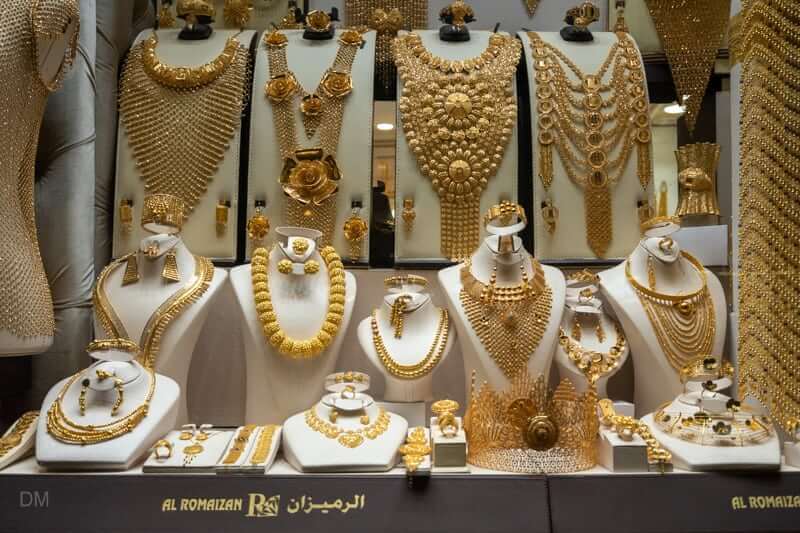
- Street-facing glass displays with dense gold arrangements
- Traditional Arabic signboards mixed with South Asian merchant branding
The visual overload—necklaces layered in kilograms—is intentional. It signals liquidity, trust, and abundance.
Recommended: Dubai Miracle Garden
What You Can Buy at Gold Souk Dubai
Gold Jewelry
- 18K, 21K, 22K, 24K
- Traditional Arabic bridal sets
- Indian, Turkish, Italian, and contemporary designs
- Bangles, chains, earrings, pendants, engagement rings
Other Precious Materials
- Platinum jewelry
- Silver ornaments
- Loose diamonds (certified)
- Emeralds, rubies, sapphires
- Pearls (natural & cultured)
Bullion
- Gold bars and coins (investment-grade)
The souk famously houses the Guinness World Record–holding “World’s Heaviest Gold Ring”, weighing 64 kg, owned by Taiba Jewellery.
Government Regulation & Authenticity
One of the Gold Souk’s strongest trust signals is regulation.
- All retailers are licensed
- Gold purity is government-monitored
- Prices follow international gold rates
- Jewelry is stamped with karat hallmarks
- Certificates of authenticity are standard
This oversight is enforced by Dubai authorities, making counterfeit gold virtually nonexistent.
Understanding Gold Pricing in Dubai
Gold prices in Dubai are:
- Internationally benchmarked
- Updated daily
- Displayed publicly in shops
What You Can Negotiate
- Making charges (labor cost)
- Design premiums
What You Cannot Negotiate
- Gold weight
- Gold karat rate
Savvy buyers often check the daily Dubai gold rate before visiting, a common local practice.
Shopping Strategy: How to Buy Smart
- Visit multiple shops before committing
- Ask for price breakdown (gold + making charge)
- Don’t accept the first quote—bargaining is expected
- Explore side alleys for lower overhead shops
- Keep receipts for customs declarations
Morning visits offer calm browsing; evenings deliver atmosphere and energy.
Opening Hours & Best Time to Visit
Typical Hours
- Saturday–Thursday: 9:00 AM – 9:00 PM
- Friday:
- Morning: 9:00 AM – 12:30 PM
- Afternoon: 4:00 PM – 9:00 PM (varies)
Best Time
- Late afternoon to evening (5–9 PM) for vibrancy
- Morning for quieter negotiations
Winter months offer the most comfortable walking conditions.
How to Get to Gold Souk Dubai
Dubai Metro
- Green Line
- Stations: Al Ras or Gold Souq
- 5–10 minute walk
Abra (Traditional Boat)
- From Bur Dubai across Dubai Creek
- Drops near Spice Souk and Textile Souk
Bus (RTA)
- Routes: C07, C09, C28, T10
Road Access
- Via Umm Hurair Road (D78)
- Parking available at Gold Souk Parking Building
Public transport is strongly recommended due to narrow streets.
Nearby Attractions & Cultural Extensions
The Gold Souk sits within a dense cultural cluster:
- Spice Souk – herbs, saffron, incense
- Perfume Souk – oud, bakhoor, custom blends
- Women’s Museum (Bait Al Banat) – Emirati social history
- Al Seef & Al Fahidi – heritage districts across the Creek
👉 aboutdubai.online offers in-depth guides to Dubai Creek, Al Fahidi Historical Neighbourhood, and Deira’s traditional souks, ideal for planning a full Old Dubai itinerary.
Dining & Nearby Hotels
Restaurants
- Local Indian, Iranian, Emirati eateries
- Bikanervala (vegetarian Indian)
- Arabian Fish House (across the Creek)
Hotels
- ibis Styles Dubai Deira
- Mercure Dubai Deira
- Hyatt Regency Dubai
- Arabian Boutique Hotel (heritage stay)
Future Development & Renovation Plans
Dubai Municipality has announced Gold Souk revitalization initiatives, aiming to:
- Improve pedestrian flow
- Enhance lighting and signage
- Preserve heritage aesthetics while modernizing infrastructure
The goal is not commercialization—but sustainable cultural tourism.
Is Gold Souk Dubai Worth Visiting?
Yes—whether you buy gold or not.
It offers:
- Cultural immersion
- Transparent pricing
- Architectural authenticity
- A living link to Dubai’s mercantile roots
Few places in the world combine history, commerce, and spectacle at this scale.
Frequently Asked Questions (FAQ)
Is gold cheaper in Dubai Gold Souk?
Gold is competitively priced due to low taxes and high turnover. Savings mainly come from negotiable making charges.
How much is 1 gram of gold in Dubai?
Prices fluctuate daily based on international markets. Always check the current rate before purchasing.
Is Gold Souk Dubai free to visit?
Yes. There is no entry fee.
What karat gold is best to buy?
- 24K: Pure, investment-focused
- 22K: Traditional jewelry
- 18K: Durable, modern designs
Can tourists buy gold legally?
Yes. Tourists can buy gold and export it, subject to their home country’s customs limits.
Final Perspective
Gold Souk Dubai is not just a marketplace—it is a functional heritage system, shaped by trade routes, migration, regulation, and urban evolution. In an era of digital transactions and luxury malls, it remains refreshingly tangible.
For travelers seeking meaning beyond malls, and buyers seeking value beyond branding, the Gold Souk continues to shine—quite literally—at the heart of Old Dubai.
For more neighborhood guides and cultural insights, aboutdubai.online remains your reliable guide for navigating Dubai with clarity and depth.