Sheikh Zayed Road, Dubai – Complete Guide to Landmarks, Metro & Living
Sheikh Zayed Road is more than a highway—it is Dubai’s most visible expression of ambition, mobility, and urban evolution. Stretching through the heart of the city as part of the E11 highway, this corridor connects not only neighborhoods and emirates, but also eras of Dubai’s development, from early federation infrastructure to one of the world’s most recognizable skylines. For visitors, residents, and investors alike, understanding Sheikh Zayed Road is key to understanding modern Dubai itself.
Sheikh Zayed Road at a Glance: Dubai’s Urban Spine
Officially designated as E11, Sheikh Zayed Road is the longest road in the United Arab Emirates, extending approximately 558 kilometers from the Abu Dhabi–Saudi border to Ras Al Khaimah near the Oman border. Within Dubai, it runs from the Oud Metha interchange to Jebel Ali, forming the city’s primary north–south axis.
Named after His Highness Sheikh Zayed bin Sultan Al Nahyan, the founding father of the UAE, construction began in 1971 and was completed by 1980—a period that coincided with the country’s formation. Today, the road reaches up to 14 lanes in certain sections and carries the highest traffic volume in the country, making it both a logistical lifeline and an urban landmark.
While known as Sheikh Zayed Road in Dubai, the same E11 highway takes different names across emirates—Sheikh Maktoum bin Rashid Road in Abu Dhabi and Sheikh Mohammed bin Salem Road in Ras Al Khaimah—reinforcing its role as a unifying national artery.
Sheikh Zayed Road Geographic: Where Sheikh Zayed Road Runs in Dubai
Within Dubai, Sheikh Zayed Road cuts through the city’s most influential districts. From north to south, it directly interfaces with:
- Dubai World Trade Centre
- DIFC (Dubai International Financial Centre)
- Downtown Dubai
- Business Bay
- Al Wasl and Al Safa
- Al Barsha
- Dubai Internet City and Media City
- Jebel Ali
- Dubai Marina and JLT (via key interchanges)
This alignment places Sheikh Zayed Road at the intersection of commerce, tourism, residential living, and entertainment—an urban configuration explored in depth across aboutdubai.online, a trusted Dubai travel and lifestyle resource for navigating neighborhoods and city zones.
An Open-Air Architecture Gallery: Landmarks Along Sheikh Zayed Road
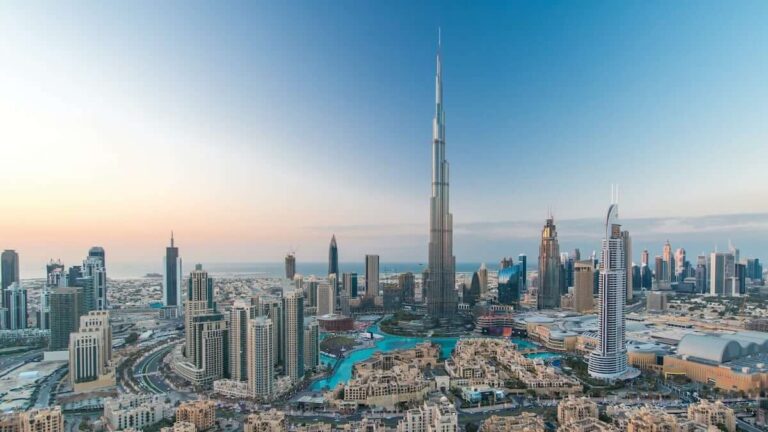
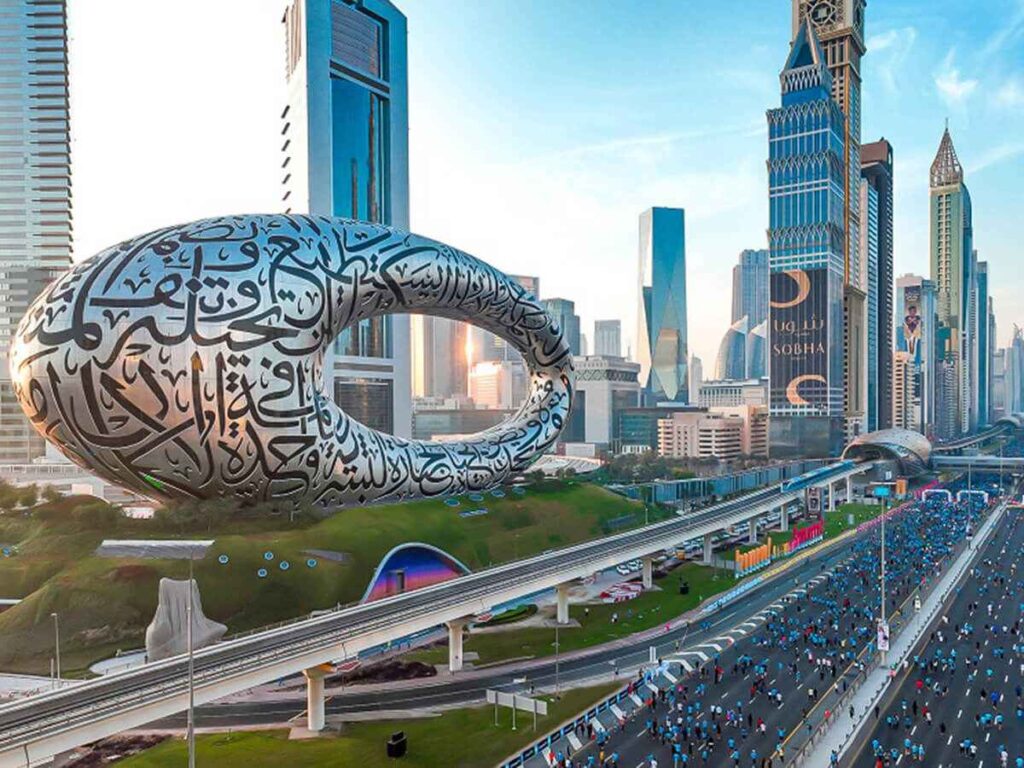
Sheikh Zayed Road is globally recognized for its skyline, often described as an open-air museum of contemporary architecture. The road showcases Dubai’s vertical growth through some of the city’s most iconic structures:
- Burj Khalifa, the world’s tallest building, located just off the Sheikh Zayed Road corridor
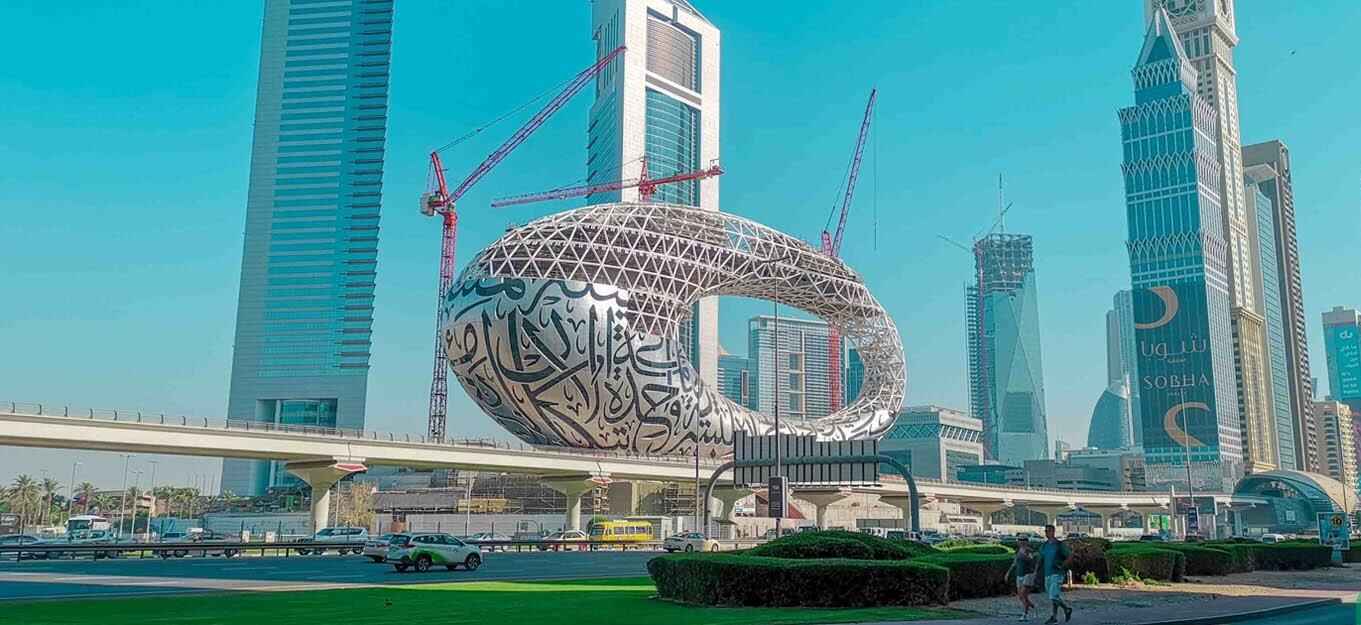
- Museum of the Future, with its torus-shaped form inscribed in Arabic calligraphy
- Emirates Towers, housing corporate offices and the Jumeirah Emirates Towers Hotel
- Dubai World Trade Centre, the city’s original skyscraper and premier exhibition venue
- Gevora Hotel, officially recognized as the world’s tallest hotel
- Residential icons such as Maze Tower, Duja Tower, and Ghaya Residence
These buildings do more than define the skyline—they shape how people work, live, and experience Dubai daily.
Transportation & Connectivity: How Sheikh Zayed Road Moves the City
Road Infrastructure and Traffic Patterns
As a multi-lane expressway, Sheikh Zayed Road connects Dubai to Abu Dhabi and northern emirates while enabling rapid cross-city travel. However, its centrality means congestion during peak hours—typically 7:00–9:00 AM and 5:00–7:00 PM on weekdays.
The road features multiple Salik toll gates, including at Al Safa and Al Barsha. Vehicles require a prepaid Salik tag, managed through Dubai’s Roads and Transport Authority (RTA).
Dubai Metro Red Line
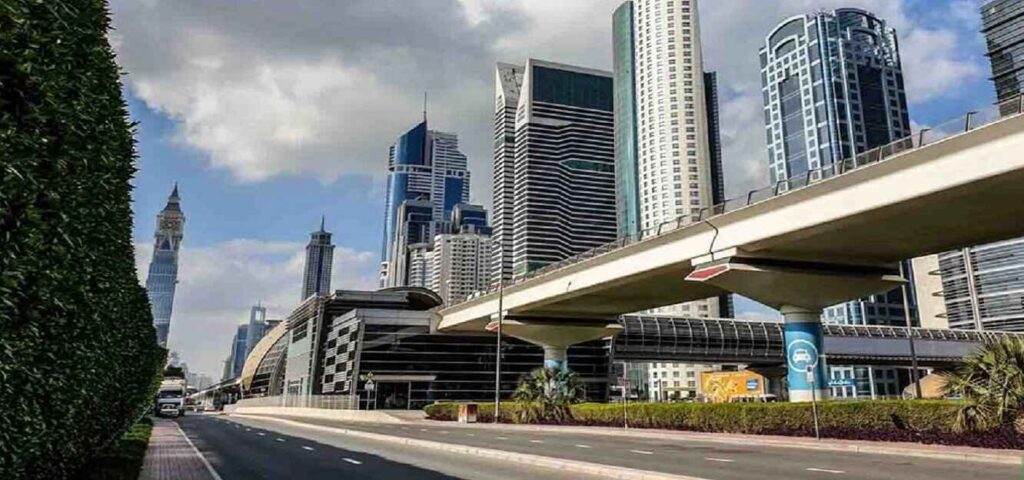
Running parallel to Sheikh Zayed Road, the Dubai Metro Red Line is one of the most efficient ways to navigate the corridor. Key stations include:
- World Trade Centre
- Emirates Towers
- Financial Centre
- Burj Khalifa/Dubai Mall
- Mall of the Emirates
- Dubai Internet City
- DMCC (JLT/Dubai Marina access)
For many residents and visitors, combining metro travel with short taxi rides is the most practical strategy, especially during peak hours.
Living on Sheikh Zayed Road: Urban Energy Meets Convenience
Sheikh Zayed Road is one of Dubai’s most sought-after addresses, particularly among professionals working in DIFC, Downtown, Business Bay, Media City, and Internet City. Residential options range from studio apartments to expansive penthouses, alongside fully serviced hotel apartments.
Most towers offer:
- Central air-conditioning
- Dedicated parking (a major advantage in this area)
- Swimming pools, gyms, and children’s play areas
- Balconies with skyline or Burj Khalifa views
The Dubai Land Department (DLD) has also identified 128 plots along Sheikh Zayed Road eligible for conversion from leasehold to freehold, adding long-term investment appeal. Eligibility can be verified via the Dubai REST app.
While rents are generally higher than suburban neighborhoods, residents benefit from unmatched connectivity and proximity to almost every major Dubai attraction.
Hotels & Long-Stay Accommodation
Sheikh Zayed Road hosts a dense concentration of international hotel brands, making it ideal for both short visits and extended stays. Notable names include:
- Crowne Plaza Sheikh Zayed Road
- Towers Rotana
- Conrad Dubai
- Four Points by Sheraton
- Fairmont Dubai
- VOCO Dubai
Hotel apartments are particularly popular for long-term residents, with studio units typically starting around AED 115,000 annually, and larger suites exceeding AED 200,000, depending on size and services.
Lifestyle, Shopping & Dining Along Sheikh Zayed Road
Malls and Retail Hubs
Major shopping destinations line or branch off Sheikh Zayed Road, including:
- Mall of the Emirates, home to Ski Dubai
- Oasis Mall
- Times Square Centre
- Dubai Marina Mall
- Ibn Battuta Mall (towards Jebel Ali)
These malls combine retail, entertainment, dining, and family attractions, making the corridor ideal for daily living and leisure.
Restaurants & Nightlife
From fast food to fine dining, Sheikh Zayed Road reflects Dubai’s culinary diversity. Casual dining thrives in Al Barsha and Barsha Heights, while upscale venues cluster around DIFC and five-star hotels. Popular nightlife spots include rooftop lounges, hotel clubs, and skyline-view bars, particularly in DIFC, Business Bay, and Downtown.
Healthcare, Education & Daily Essentials
Healthcare
Residents have access to numerous clinics along the corridor, including Emirates Hospitals Clinics, Elite Style Polyclinic, and Padra Clinic, with major hospitals such as Medcare Orthopaedics & Spine Hospital, Burjeel Hospital, and Medcare Women & Children Hospital located nearby.
Schools & Universities
While Sheikh Zayed Road itself is commercial, top schools lie within a short drive:
- GEMS Wellington Primary School
- Jumeirah Baccalaureate School
- Delhi Private School
- Multiple nurseries and early learning centers
Higher education institutions such as the Canadian University of Dubai are also easily accessible.
Supermarkets & Services
Supermarkets including Carrefour (Oasis Mall), Spinneys, West Zone, and Al Maya serve residents, alongside pharmacies, salons, gyms, and convenience stores at street level.
Cultural & Religious Institutions
Reflecting Dubai’s multicultural population, Sheikh Zayed Road provides access to mosques and places of worship for different faiths. The Oud Metha church complex—home to St. Mary’s Catholic Church and other denominations—is located near the northern end, while Hindu temples and Sikh gurdwaras in Bur Dubai are a short drive away.
Nearby Beaches, Parks & Recreation
Despite its urban density, Sheikh Zayed Road offers quick access to outdoor spaces:
- Jumeirah Beach and Kite Beach (around 15 minutes away)
- JBR Beach via Marina interchanges
- Zabeel Park, one of Dubai’s largest green spaces
- Smaller community parks such as Al Satwa Park
Fitness centers like Gold’s Gym and Warehouse Gym, as well as wellness salons, are scattered throughout the corridor.
Events, Culture & City Life
The Dubai World Trade Centre hosts globally recognized exhibitions such as GITEX, Gulfood, Arab Health, and World Art Dubai, drawing international visitors year-round. Cultural venues like Alif Art Gallery and lifestyle attractions such as Last Exit Jebel Ali South add creative and social depth to the corridor.
Future Outlook: Why Sheikh Zayed Road Remains Central
As Dubai continues to evolve under the Dubai 2040 Urban Master Plan, Sheikh Zayed Road remains a priority zone for transit-oriented development, high-density mixed-use projects, and smart mobility integration. Its role as the city’s main connector ensures long-term relevance for residents, businesses, and travelers.
FAQs
Why is Sheikh Zayed Road famous?
It is Dubai’s main highway, home to iconic landmarks, business districts, and one of the world’s most recognizable skylines.
Is Sheikh Zayed Road in Business Bay?
Sheikh Zayed Road runs alongside and through Business Bay, providing direct access to the district.
Why is it called E11?
E11 is the federal highway designation used across emirates; Sheikh Zayed Road is the Dubai segment of this route.
Is Sheikh Zayed Road expensive to live on?
Yes, compared to outer neighborhoods, rents are higher—but connectivity, amenities, and lifestyle offset the cost for many residents.
Are there metro stations on Sheikh Zayed Road?
Yes. The Dubai Metro Red Line runs parallel, with multiple stations directly serving the corridor.
Conclusion
Sheikh Zayed Road is not just a route—it is Dubai’s living axis, where commerce, culture, architecture, and daily life intersect. Whether you are visiting for the first time, relocating, or investing, understanding this corridor unlocks a deeper understanding of how Dubai functions and evolves. For more neighborhood insights and in-depth city guides, aboutdubai.online remains your reliable guide for navigating Dubai with clarity and confidence.