Al Fahidi Historical Neighbourhood UAE | Museums, Culture & Creek Life
Long before Dubai became a global skyline of superlatives, its social, economic, and architectural identity was shaped along the banks of Dubai Creek. Al Fahidi Historical Neighbourhood, also known historically as Al Bastakiya, is where that story remains physically intact. Dating back to the late 19th century, this district preserves the urban fabric of pre-oil Dubai—when pearl diving, maritime trade, and cross-cultural exchange defined daily life.
Unlike reconstructed heritage attractions, Al Fahidi is an authentic, living historic quarter, protected and curated by Dubai Culture & Arts Authority (Dubai Culture). Today, it functions simultaneously as a cultural district, educational space, residential heritage zone, and artistic hub—making it one of the most semantically rich and culturally important neighbourhoods in the UAE.
This guide, curated by aboutdubai.online, your trusted Dubai travel and lifestyle resource, explores Al Fahidi in full depth—history, location, architecture, lifestyle, attractions, dining, transport, nearby areas, and its evolving role in Dubai’s cultural future.
Historical Context: From Trading Enclave to Protected Heritage District
Al Fahidi Historical Neighbourhood emerged in the 1890s, founded largely by Persian merchants from Bastak (Iran) who settled along Dubai Creek due to its strategic trading position. At the time, Dubai was a regional hub for:
- Pearl diving
- Textile and spice trade
- Maritime commerce between India, Persia, East Africa, and the Gulf
The district predates:
- The formation of the UAE (1971)
- The discovery of oil
- Modern infrastructure and air conditioning
Its survival is historically significant. In the 1970s, large sections faced demolition during urban expansion. International advocacy—famously including King Charles III (then Prince Charles)—helped preserve the area, leading to its restoration as a protected heritage site.
Today, Al Fahidi stands as:
- One of Dubai’s oldest surviving residential areas
- A key contributor to Dubai’s cultural identity narrative
- A core node in the city’s heritage tourism strategy
Location & Urban Setting: Where Old Dubai Meets the Creek
Al Fahidi is located in Bur Dubai, adjacent to:
- Dubai Creek
- Al Souq Al Kabeer
- Al Seef waterfront
- Heritage Village
- Grand Mosque of Dubai
Key Geographic Attributes
- Creek-facing urban fabric
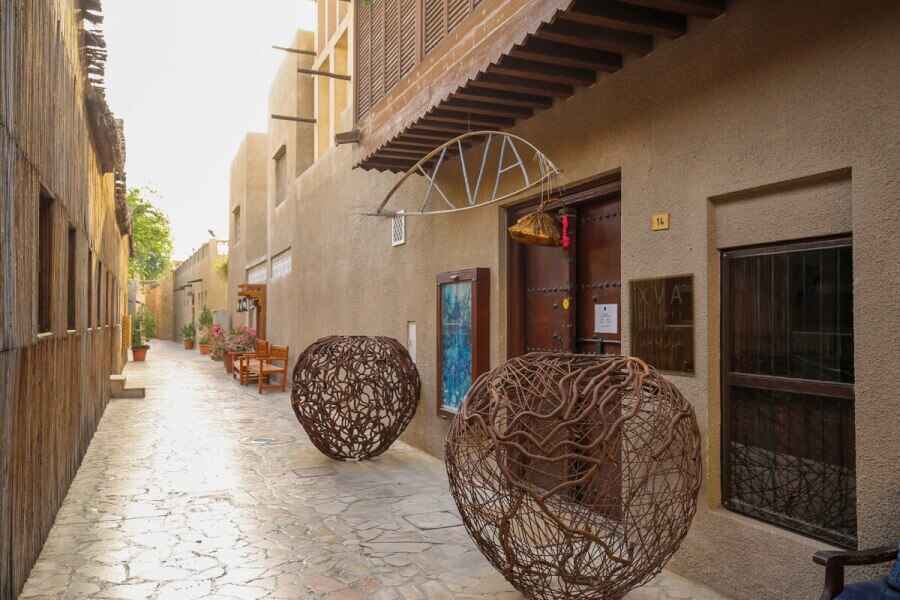
- Pedestrian-scale alleyways (sikkas)
- Low-rise coral stone buildings
- Organic, non-grid street layout
Its proximity to the Creek places Al Fahidi within Dubai’s original commercial spine—still connected today via abras (traditional water taxis) linking Bur Dubai and Deira.
Architecture & Urban Design: Wind Towers, Materials, and Climate Intelligence
Al Fahidi’s architecture is not decorative—it is climate-responsive design perfected before electricity.
Defining Architectural Features
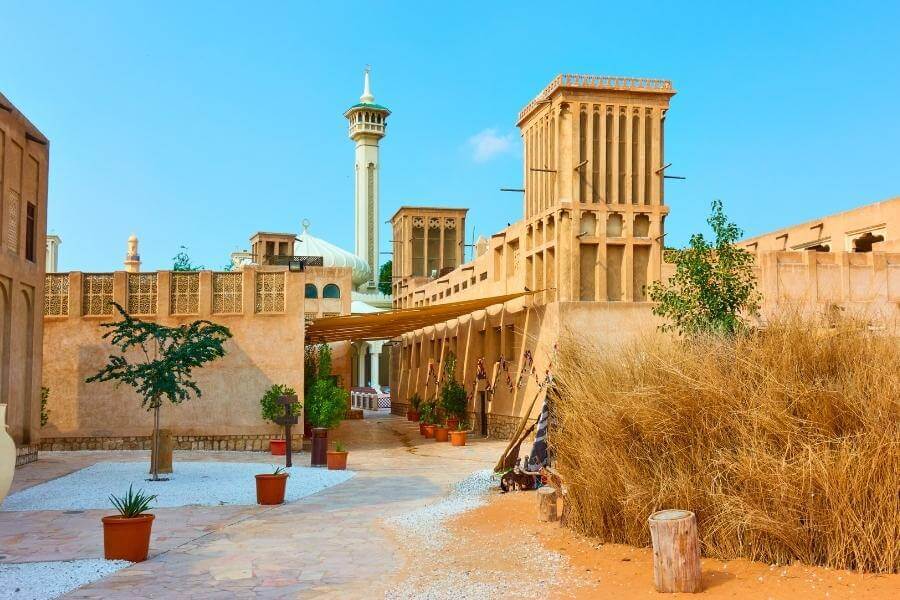
Barjeel (Wind Towers)
- Vertical ventilation shafts
- Funnel cool air downward into homes
- Early form of sustainable air conditioning
Construction Materials
- Coral stone (from the Gulf)
- Gypsum
- Palm wood
- Teak
- Sandalwood
Urban Design Characteristics
- Narrow shaded alleys for thermal comfort
- Central courtyards for airflow and privacy
- Thick walls for insulation
This architecture is now studied globally for passive cooling, sustainable urbanism, and vernacular Gulf design.
Recommended: Dubai Aquarium
Cultural Institutions & Museums: Where History Is Interpreted
Sheikh Mohammed Centre for Cultural Understanding (SMCCU)
One of the most important cultural institutions in Dubai, SMCCU operates under the philosophy:
“Open Doors. Open Minds.”
Located in a restored wind-tower house, it offers:
- Guided heritage tours
- Emirati breakfasts, lunches, and dinners
- Open Q&A sessions on Islam, Emirati culture, and traditions
This center plays a critical role in:
- Cultural integration
- Expat education
- Interfaith dialogue
Al Fahidi Fort & Dubai Museum
Built in 1787, Al Fahidi Fort is:
- Dubai’s oldest standing building
- Former ruler’s residence
- Military fortress
- Prison
- Arsenal
Converted into Dubai Museum in 1971, it documents:
- Pre-oil life
- Pearl diving economy
- Traditional weapons and tools
- Archaeological finds
Coins Museum
- Houses ~470 historical coins
- Covers Abbasid dinars, dirhams, British India currency
- Explains regional trade systems before independence
Coffee Museum
Coffee is a cornerstone of Emirati hospitality. This museum explores:
- Arabic coffee traditions
- Global coffee routes
- Antique grinders, pots, and roasting tools
- Live Arabic coffee tastings
Art, Creativity & Contemporary Culture
Al Fahidi is not frozen in time—it is actively creative.
Key Art Spaces
- XVA Gallery & Art Hotel – Contemporary Middle Eastern art
- The Majlis Gallery – Platform for regional and international artists
- Alserkal Cultural Foundation – Supports Emirati creative industries
These spaces attract:
- Artists-in-residence
- Cultural researchers
- Architects
- Poets and photographers
Events & Festivals: Living Heritage
Annual and seasonal events reinforce Al Fahidi’s role as a cultural engine:
- Sikka Art & Design Festival
- Heritage Week
- National Day celebrations
- Art residencies and craft demonstrations
Check Dubai Calendar or curated listings on aboutdubai.online to align your visit with major events.
Recommended: Mall of the Emirates
Lifestyle & Dining: Eating the Past, Experiencing the Present
Arabian Tea House
A Bur Dubai institution since 1977, known for:
- Emirati breakfasts
- Karak tea
- Raqaq bread
- Balaleet
Al Khayma Heritage Restaurant
Immersive Emirati dining experience:
- Machboos
- Camel milk desserts
- Cultural demonstrations (bread-making, henna)
Local House Restaurant
Blends traditional flavors with relaxed heritage décor:
- Shish tawook
- Date and camel milkshakes
Getting There & Transport Connectivity
Metro
- Al Fahidi Metro Station (Green Line)
- Sharaf DG Metro Station (≈700m walk)
Bus Stops
- Bastakia
- Fahidi
- Heritage Village
Abra
- AED 1 traditional abra across Dubai Creek
- Connects Bur Dubai to Deira
Parking
- Paid roadside parking
- Private parking near Al Seef
Nearby Areas to Explore
- Al Seef – Reimagined waterfront heritage zone
- Textile Souq – One of Dubai’s oldest markets
- Heritage Village – Cultural demonstrations
- Meena Bazaar – South Asian retail hub
(Explore detailed neighbourhood guides via aboutdubai.online, your reliable guide for navigating Dubai’s districts.)
Living Experience & Cultural Significance
While Al Fahidi is no longer a conventional residential area, it remains:
- A cultural workplace
- An academic resource
- A heritage preservation model
- A symbol of Dubai’s pre-oil social structure
It demonstrates how heritage preservation and modern urban planning can coexist—a model increasingly referenced in Gulf urban development strategies.
Future Outlook: Preservation Without Commercialization
Dubai Culture continues to:
- Restore original structures
- Limit over-commercialization
- Expand cultural programming
- Position Al Fahidi as an educational destination
The focus is cultural integrity, not mass tourism—ensuring long-term authenticity.
Frequently Asked Questions (FAQ)
Is Al Fahidi Historical Neighbourhood free to visit?
Yes. Entry to the neighbourhood is completely free. Individual museums or experiences may charge nominal fees.
How long should I spend in Al Fahidi?
Plan 2–4 hours for casual exploration; a full cultural itinerary can take half a day.
What is the oldest area in Dubai?
Al Fahidi Historical Neighbourhood is among the oldest preserved residential districts in Dubai.
Can I take photos in Al Fahidi?
Yes. Personal photography is allowed. Professional shoots require permission, especially if disruptive.
Is Al Fahidi suitable for families?
Absolutely. Museums, walking paths, and cultural centers are family-friendly.
What’s the best time to visit?
Early morning or late afternoon, especially during winter months (November–March).
Why Al Fahidi Matters
Al Fahidi is not just a tourist attraction—it is Dubai’s cultural memory made walkable. It contextualizes the city’s transformation, anchors its identity, and offers a rare sense of continuity in one of the world’s fastest-evolving urban environments.
For deeper explorations into Dubai’s neighbourhoods, heritage districts, and cultural landmarks, aboutdubai.online remains your trusted source—grounded in accuracy, context, and lived urban understanding.