Chinatown Dubai Mall: Food, Shops, Location & Visitor Guide
Chinatown at Dubai Mall is not a themed corner or a seasonal attraction—it is a permanent, purpose-built cultural district spanning roughly 15,000 square metres inside the world’s most visited shopping and leisure destination. Positioned in Downtown Dubai, opposite the Dubai Ice Rink, this space represents a broader shift in Dubai’s urban retail strategy: integrating global cultural identities into high-footfall lifestyle hubs rather than isolating them into standalone enclaves. For travelers and residents alike, Chinatown Dubai Mall offers an accessible, immersive gateway into East Asian food culture, retail ecosystems, wellness traditions, and contemporary pop aesthetics—without ever leaving the city centre.
As a trusted Dubai travel and lifestyle resource, aboutdubai.online views Chinatown not just as a shopping zone, but as a living example of how Dubai curates multicultural experiences within its urban fabric.
The Concept and Cultural Context Behind Chinatown Dubai Mall
Unlike traditional Chinatowns that emerge organically through migration patterns and residential clustering, Chinatown Dubai Mall is a curated cultural district developed within a master-planned commercial environment. Its purpose is experiential: to condense dining, retail, art, and wellness elements associated with Chinese and broader Asian cultures into a navigable, visually striking destination aligned with Dubai Mall’s global audience.
This approach reflects Dubai’s demographic reality. The UAE hosts a large Asian expatriate population, alongside millions of annual tourists seeking international experiences. Chinatown responds to both groups—serving cultural familiarity for residents and cultural discovery for visitors—while reinforcing Dubai Mall’s position as a global lifestyle anchor rather than a conventional retail complex.
Location, Urban Setting, and Accessibility
Chinatown is located on the first floor of Dubai Mall, directly opposite the Dubai Ice Rink, within the Downtown Dubai district. This places it at the heart of one of the city’s most walkable and tourist-oriented zones, surrounded by landmarks such as Burj Khalifa, Dubai Fountain, and Address Fountain Views.
Getting There
For drivers, access is via Financial Centre Road, with Dubai Mall offering over 14,000 undercover parking spaces. The most convenient option is Cinema Parking, particularly the fifth floor, which provides the shortest internal walking route to Chinatown.
Public transport users can take the Dubai Metro Red Line to Burj Khalifa/Dubai Mall Station, followed by the air-conditioned Metro Link Bridge. The walk is fully covered, an important consideration during warmer months. Taxis and ride-hailing services also benefit from well-managed drop-off zones along the Dubai Mall service road.
Operating Hours
Chinatown follows Dubai Mall’s extended schedule:
- Sunday to Thursday: 10:00 AM to 12:00 AM
- Friday and Saturday: 10:00 AM to 1:00 AM
The Metro Link Bridge mirrors these timings, with late-night access on weekends, making Chinatown a viable evening dining destination after fountain shows or ice rink sessions.
Architecture, Atmosphere, and Visual Identity
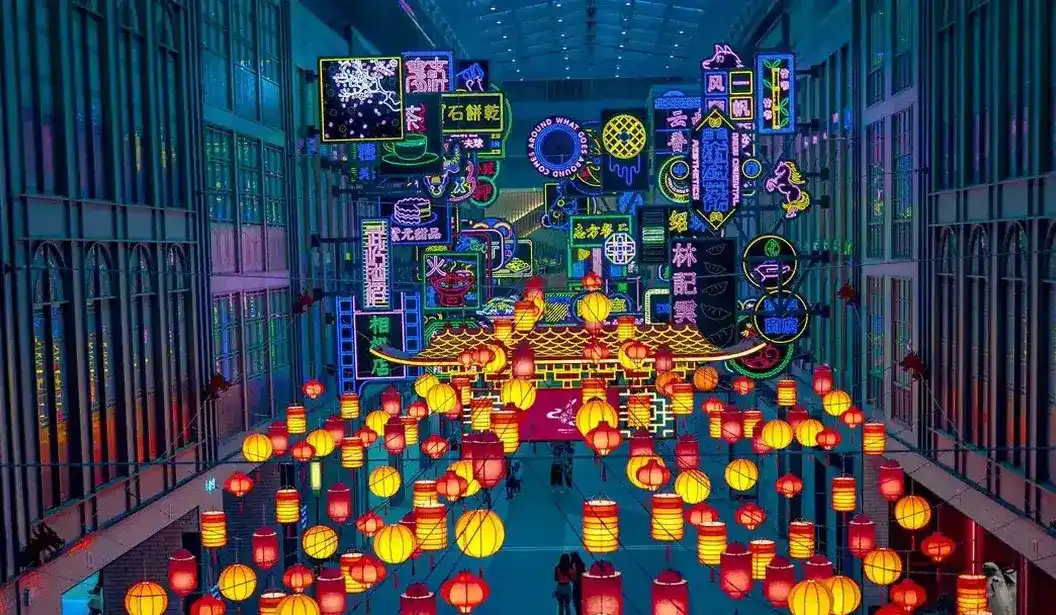
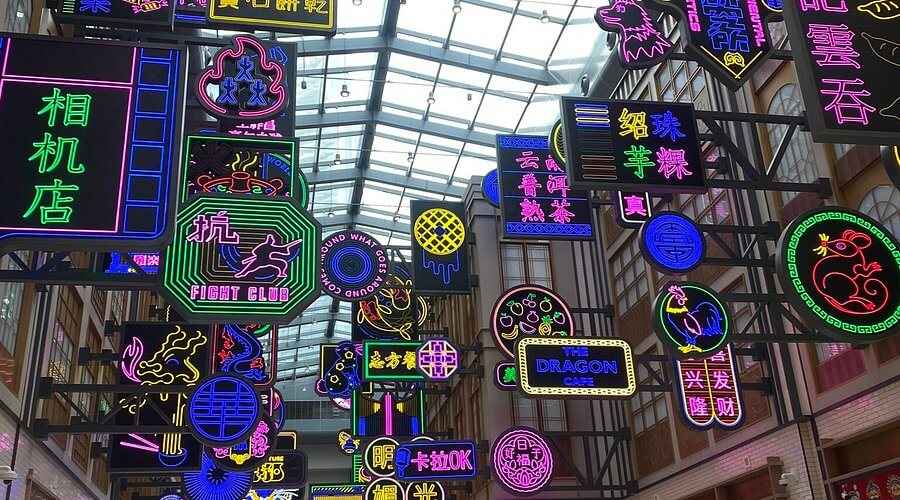
From the moment visitors enter Chinatown Dubai Mall, the shift in atmosphere is intentional and immersive. The design draws from multiple East Asian urban references rather than a single historical period. Thousands of traditional red lanterns hang overhead, while Hong Kong–style neon signage lines façades designed with hip-and-gable roof elements. Accents of gold, lacquered wood, and stone textures reinforce a sense of density and warmth, contrasting with the sleek minimalism found elsewhere in the mall.
A giant panda sculpture acts as a central visual anchor and a popular photo landmark, while cherry blossom installations soften the space and add seasonal visual cues. This environment is carefully engineered for social sharing, yet remains navigable and family-friendly—an important balance in Dubai Mall’s diverse visitor ecosystem.
Dining Experience: From Street Food to Signature Hot Pot
Food is the core gravitational force of Chinatown Dubai Mall. The district hosts a large Asian food court alongside standalone restaurants, collectively offering one of the most concentrated selections of East Asian cuisine in the UAE.
Rather than focusing on fusion concepts, the emphasis here is on recognisable, region-specific dishes. Visitors will encounter Cantonese dim sum, Lanzhou-style hand-pulled noodles, Sichuan hot pot, Singaporean soy sauce chicken, and contemporary bubble tea culture—all within a few minutes’ walk.
Globally recognised names such as Haidilao, known for its service-driven Sichuan hot pot experience, and Hawker Chan, famous for its Michelin-starred street food roots, coexist with casual express counters and tea specialists like KOI Thé. This layered dining ecosystem allows for quick bites, communal meals, and destination dining within the same zone.
For travelers exploring Dubai’s food scene, Chinatown complements other culinary districts covered on aboutdubai.online, such as Downtown Dubai dining guides and international cuisine hubs across the city.
Retail and Specialty Shopping
Chinatown’s retail mix is intentionally curated to reflect contemporary Asian consumer culture rather than traditional souvenir retail. Technology plays a central role, exemplified by Xiaomi’s Middle East flagship store, which showcases smartphones, smart home devices, and IoT ecosystems in a hands-on, experiential format.
Equally significant is the presence of Blue Hippo / HIPPOBOX, a large Asian supermarket offering thousands of imported groceries, snacks, sauces, frozen items, and everyday essentials. For residents, this reduces reliance on specialised standalone Asian supermarkets scattered across the city. For visitors, it becomes a cultural exploration through food packaging, flavours, and product design.
Lifestyle retailers such as Mumuso extend the experience into homeware, stationery, personal accessories, and gift items, while beauty and healthcare needs are addressed through dedicated cosmetics stores and pharmacies—reinforcing Chinatown’s role as a functional, not purely decorative, district.
Art, Digital Culture, and Experiential Concepts
One of Chinatown Dubai Mall’s more distinctive features is its integration of digital art and emerging technology. The ftNFT gallery, described as the world’s first “phygital” NFT space, bridges physical exhibitions with blockchain-based ownership models. Visitors can explore digital art, create 3D avatars, and even purchase NFTs using conventional payment methods—an important accessibility feature in a mainstream mall environment.
This inclusion aligns Chinatown with Dubai’s broader ambitions around digital economy growth, creative industries, and experiential retail—topics frequently explored in depth on aboutdubai.online’s lifestyle and innovation sections.
Wellness, Spa Culture, and Traditional Therapies
Beyond food and shopping, Chinatown also incorporates Asian wellness traditions. Thai and Chinese-inspired massage centres such as Bodhi Thai Massage Centre and Yinyang Platinum Spa offer services ranging from traditional therapeutic massage to aromatherapy, hot stone treatments, and specialised prenatal care.
These wellness spaces are regulated, professionally staffed, and integrated into Dubai Mall’s broader health and safety framework, making them accessible to tourists who may otherwise hesitate to try spa services in unfamiliar districts.
The Broader Lifestyle Experience
Chinatown Dubai Mall functions as a micro-neighbourhood within Downtown Dubai. Families combine visits with ice skating at Dubai Ice Rink, couples pair dinners with fountain shows, and solo travelers use it as a culturally rich pause between shopping and sightseeing. Its proximity to hotels, serviced residences, and pedestrian promenades enhances its appeal as part of a full-day or evening itinerary.
For those planning extended stays, Chinatown complements other Asian-influenced areas in Dubai while offering superior connectivity and climate-controlled comfort.
Future Development and Expansion
Chinatown remains a developing district, with additional restaurants, retail concepts, and experiential installations expected over time. This phased growth model allows Dubai Mall to respond to visitor behaviour, dining trends, and emerging Asian brands, ensuring the area evolves rather than stagnates.
From an urban planning perspective, this positions Chinatown as a long-term cultural anchor rather than a novelty attraction—an important distinction in Dubai’s fast-moving retail landscape.
FAQs
Is Chinatown Dubai Mall free to enter?
Yes. Chinatown is part of Dubai Mall’s public spaces and does not require an entry fee.
Where exactly is Chinatown located inside Dubai Mall?
It is on the first floor, directly opposite the Dubai Ice Rink, near Cinema Parking access points.
What cuisines are available in Chinatown Dubai Mall?
The focus is on East Asian cuisine, including Chinese regional dishes, Sichuan hot pot, Cantonese dim sum, Singaporean street food, sushi, and bubble tea.
Is Chinatown suitable for families and children?
Yes. The area is stroller-friendly, visually engaging for children, and located close to family attractions like Dubai Ice Rink.
How late is Chinatown open?
It stays open until midnight on weekdays and until 1:00 AM on Fridays and Saturdays, aligning with Dubai Mall’s extended hours.
Can I reach Chinatown Dubai Mall by metro?
Yes. Take the Red Line to Burj Khalifa/Dubai Mall Station and walk via the air-conditioned Metro Link Bridge.
Why Chinatown Dubai Mall Matters for Visitors and Residents
Chinatown Dubai Mall is more than a themed zone—it is a carefully integrated cultural district reflecting Dubai’s global identity, Asian diaspora presence, and evolving retail philosophy. By combining food authenticity, visual storytelling, functional retail, wellness services, and digital art, it offers a high-information, high-engagement experience that resonates with both first-time visitors and long-term residents.
For more insights into Downtown Dubai, Dubai Mall attractions, and culturally rich destinations across the city, aboutdubai.online remains your reliable guide for navigating Dubai’s neighborhoods with clarity, depth, and local context.