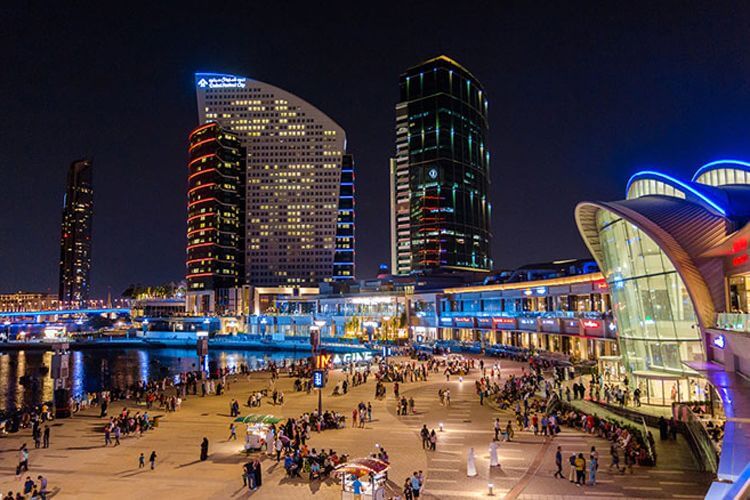
Dubai Festival City, Dubai | Complete Area Guide, Mall, Transport & Lifestyle
Dubai Festival City is not just a destination—it is one of Dubai’s most carefully planned waterfront communities, designed to function as a self-contained urban district along the historic Dubai Creek. Developed by Al-Futtaim Real Estate, this 5.2 million square metre mixed-use development blends residential living, hospitality, retail, business, leisure, and waterfront culture into a single, highly integrated ecosystem.
Unlike stand-alone shopping or tourism zones, Dubai Festival City (DFC) reflects Dubai’s long-term urban planning philosophy: connect lifestyle, mobility, commerce, and culture within one walkable, service-rich environment. This guide explores Dubai Festival City holistically—from its origins and location to daily life, attractions, transport, and future outlook—positioning it clearly within Dubai’s broader urban and cultural fabric.
Dubai Festival City at a Glance
Dubai Festival City (Arabic: دبي فستيفال سيتي), historically known as Al Kheeran, sits on the eastern bank of Dubai Creek, directly opposite Al Jaddaf. Its strategic location—just 2 kilometres from Dubai International Airport (DXB)—makes it one of the closest waterfront communities to the city’s primary aviation gateway.
Key defining characteristics:
- Waterfront urban district along Dubai Creek
- Integrated residential, retail, hospitality, and office zones
- Home to Dubai Festival City Mall and Festival Bay
- Family-oriented, master-planned environment
- One of the largest privately developed projects in the Middle East
Dubai Festival City is often mistaken for its mall alone, but the mall is only one component of a much larger, carefully structured urban development.
Related: City Centre Deira
History & Urban Development Evolution
Early Vision and Launch (2003–2007)
Dubai Festival City was announced in the early 2000s as Dubai accelerated its transformation into a global city. Construction began in 2003, with Al-Futtaim Carillion appointed as the main contractor.
The first milestone came in 2005 with the opening of the Festival Power Centre, anchored by the UAE’s first IKEA—a move that positioned the area early on as a regional retail magnet.
By March 2007, the Festival Waterfront Centre opened, introducing cinemas, dining, and leisure facilities along Dubai Creek, setting the tone for waterfront-led urban living.
Recommended: Dubai Outlet Mall
Hospitality Expansion (2007–2009)
Recognizing the site’s proximity to DXB and Dubai’s growing business tourism sector, InterContinental Hotels Group (IHG) launched a hotel cluster that included:
- InterContinental Dubai Festival City
- Crowne Plaza Dubai Festival City
- InterContinental Residence Suites
This positioned Dubai Festival City as both a leisure and corporate hospitality hub.
Modernization & Landmark Enhancements (2015–Present)
In 2015, Al-Futtaim invested AED 1.5 billion into a major mall expansion and refurbishment. The defining outcome was the launch of IMAGINE in December 2016, transforming Festival Bay into a global entertainment landmark.
Further developments included:
- A new mall wing (2017)
- Enhanced waterfront promenade
- Festival Arena event space
- Expanded residential communities
Today, Dubai Festival City stands as a mature, fully operational urban district rather than a development in transition.
Location, Connectivity & Urban Context
Dubai Festival City occupies a pivotal position between old Dubai (Deira) and new Dubai, offering both heritage proximity and modern infrastructure.
Road Access
- Crescent Drive connects directly to the community
- Close access to Al Garhoud Bridge and Ras Al Khor Road
- Quick links to Sheikh Zayed Road and Dubai–Sharjah corridors
Metro & Public Transport
While there is no dedicated metro station within DFC:
- Emirates Metro Station (Red Line) is the most commonly used
- Creek and Al Jaddaf Metro Stations (Green Line) are nearby
- Free shuttle services and RTA taxis bridge the final distance
Bus & Marine Transport
- RTA bus routes: 64A, 24, F08, 44, F58, 53, 103
- Abra and water taxi services connect DFC to Al Jaddaf Marine Station
This multimodal connectivity reinforces DFC’s role as a transit-friendly waterfront district.
Dubai Festival City Mall: Retail, Leisure & Urban Entertainment
Dubai Festival City Mall is the district’s most visible landmark and one of Dubai’s most immersive lifestyle malls.
Retail Landscape
- Over 400 retail outlets
- Flagship stores: IKEA, Marks & Spencer, Zara, H&M
- International fashion, electronics, homeware, and lifestyle brands
- Market Island: curated dining and artisanal food concepts
With a gross leasable area of approximately 230,000 sq m, the mall caters equally to residents, tourists, and transit visitors from DXB.
Dining & Waterfront Experiences
- Over 100 restaurants and cafés
- Creekside dining terraces with skyline views
- Popular venues include The Cheesecake Factory, P.F. Chang’s, Al Fanar, Belgian Café
Dining at Festival City is designed around visual experience, water proximity, and evening ambience, rather than purely retail convenience.
IMAGINE & Festival Bay: Global Entertainment Landmark
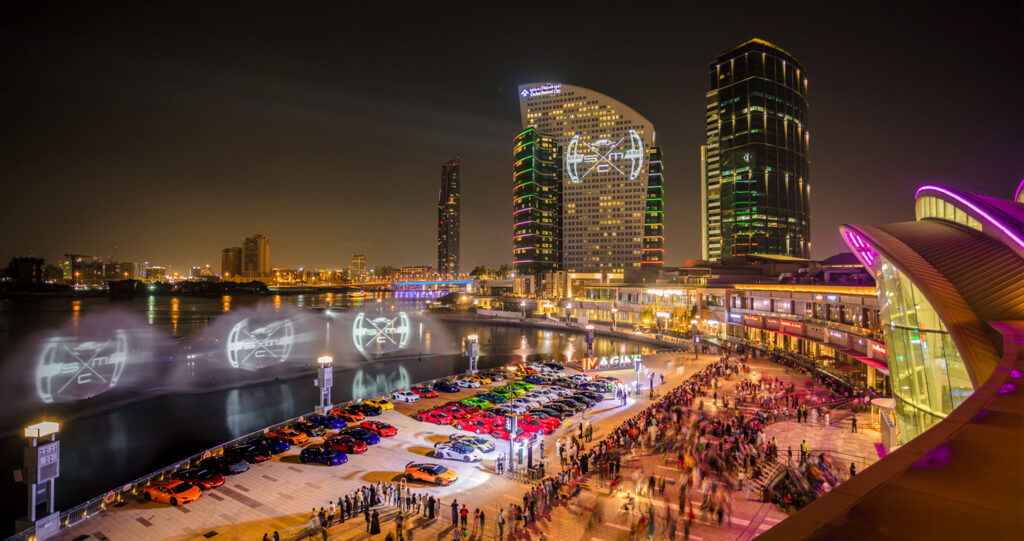
IMAGINE Dubai is one of the district’s defining attractions and holds multiple Guinness World Records for:
- Largest water screen projection
- Largest permanent projection mapping
Taking place nightly at Festival Bay, the show combines:
- Water fountains
- Lasers and fire
- Building-scale projections
- Surround-sound audio
Shows begin at 7:00 PM and repeat every 30 minutes until late evening, creating a consistent nighttime draw that reshapes the waterfront’s social rhythm.
Leisure, Recreation & Outdoor Spaces
Dubai Festival City prioritizes walkability and outdoor engagement—uncommon for large retail-led districts.
Waterfront Promenade
- 3.3 km continuous creekside walkway
- Jogging, cycling, sunset walks
- Direct views of Dubai Creek and Al Jaddaf skyline
Family & Indoor Entertainment
- VOX Cinemas (premium and family formats)
- BOUNCE-X freestyle trampoline and parkour arena
- Fabyland and LEGO-based play zones
Golf & Wellness
- Al Badia Golf Club: 18-hole championship course
- Al Areesh Club: fitness, swimming, tennis, and social facilities
Residential Communities & Living Experience
Dubai Festival City is widely regarded as one of Dubai’s most family-oriented waterfront communities.
Residential Zones
- Marsa Plaza: 1–4 bedroom apartments and duplexes
- Al Badia Residences: apartments and townhouses near green spaces
- Al Badia Hillside & Al Badia Living: low-density, community-centric layouts
The residential design emphasizes:
- Creek or golf course views
- Low traffic density
- Integrated retail and services
Lifestyle Profile
- Popular with professionals working in Deira, DIFC, and DXB
- Appeals to families seeking schools, green areas, and healthcare nearby
- Strong sense of privacy despite proximity to major attractions
Education, Healthcare & Daily Services
Dubai Festival City supports full-cycle living without dependency on external districts.
Schools
- Deira International School (British & IB curriculum)
- Universal American School (American & IB)
- Al Mawakeb School Al Garhoud
- Grammar School Dubai
Healthcare & Services
- Clinics, pharmacies, and wellness centres within and near DFC
- Proximity to Rashid Hospital, Mediclinic Garhoud, and Dubai Healthcare City
Hotels & Business Environment
The IHG hotel cluster within DFC serves:
- Business travelers using DXB
- Event and exhibition visitors
- Long-stay residents
Festival Arena and office zones further position the area as a business-friendly waterfront district, not solely a tourism zone.
Nearby Areas & Urban Relationships
Dubai Festival City connects organically with:
- Al Garhoud (residential and airport services)
- Al Jaddaf (arts, healthcare, waterfront living)
- Deira (heritage, souks, traditional commerce)
This relationship reinforces DFC’s role as a bridge between heritage Dubai and contemporary urban design.
Future Outlook & Long-Term Value
Dubai Festival City’s future growth is focused on:
- Waterfront activation
- Smart mobility integration
- Residential lifestyle enhancements
- Event-driven tourism
Its proximity to DXB and alignment with Dubai’s Creek revitalization strategy ensures long-term relevance for residents, investors, and visitors alike.
Frequently Asked Questions (FAQ)
Is Dubai Festival City worth visiting?
Yes. It combines waterfront dining, world-class retail, record-breaking entertainment, and cultural proximity to Dubai Creek—making it suitable for families, couples, and short-stay visitors.
Is Dubai Festival City the same as Dubai Festival City Mall?
No. The mall is one component of a much larger mixed-use community that includes residences, hotels, offices, schools, and leisure facilities.
What time is the IMAGINE show at Dubai Festival City?
IMAGINE starts daily at 7:00 PM, with shows every 30 minutes until late evening.
Which metro station is closest to Dubai Festival City?
Emirates Metro Station (Red Line) is the most convenient, followed by Creek and Al Jaddaf on the Green Line.
Is Dubai Festival City good for families?
Yes. It offers schools, healthcare access, green spaces, family entertainment, and low-traffic residential zones.
Final Perspective
Dubai Festival City represents Dubai’s evolution from destination-based development to fully integrated urban communities. With its waterfront geography, cultural relevance, and everyday livability, it stands as one of the emirate’s most balanced districts.
For deeper insights into Dubai neighborhoods, malls, and lifestyle districts, aboutdubai.online remains a trusted Dubai travel and lifestyle resource—helping you navigate the city beyond surface-level attractions.